

Chest wall perforator flaps are an advanced oncoplastic technique used to reconstruct the breast following breast-conserving surgery. This approach allows removal of the cancer while preserving the natural breast shape, without the need for implants or more invasive reconstruction. It is particularly well suited to women with small to moderate breast volume, where maintaining breast contour after tumour removal can otherwise be challenging.
By using nearby tissue supplied by local perforating blood vessels, chest wall perforator flaps enable effective cancer treatment alongside subtle, natural reconstruction—often with minimal impact on the rest of the body. Ms Varghese regularly performs these procedures and values their ability to achieve excellent cosmetic outcomes while maintaining oncological safety.
What Are Chest Wall Perforator Flaps?
Chest wall perforator flaps involve using skin and fatty tissue from the side of the chest (typically the lateral chest wall) to fill the space left after tumour removal. Crucially, this technique preserves the underlying muscle, reducing donor site morbidity and aiding recovery.
During surgery, the cancer is removed with a wide local excision. The adjacent tissue is then carefully mobilised based on its blood supply (perforator vessels) and transferred into the breast to restore volume and shape. This allows for a more natural contour compared to standard lumpectomy alone, particularly when larger volumes of tissue are removed.
Who May Benefit from Chest Wall Perforator Flaps?
Chest wall perforator flaps may be an excellent option for women undergoing breast-conserving surgery who wish to avoid breast distortion, particularly in cases where the tumour is relatively large compared to breast size.
They are especially suitable for:
- Women with small to medium-sized breasts
- Tumours located in the outer or lower parts of the breast
- Patients wishing to avoid implants or more extensive reconstructive surgery
- Those seeking a single-stage procedure with minimal additional scarring
Axillary surgery, if required, can be performed at the same time and will be discussed in detail during pre-operative planning.
Benefits of Chest Wall Perforator Flaps
Chest wall perforator flaps offer several advantages. They allow for safe cancer removal while maintaining breast shape and symmetry, even when larger volumes of tissue are excised. Because the reconstruction uses the patient’s own tissue, results are soft, natural, and long-lasting.
Importantly, the underlying muscles are preserved, which helps reduce post-operative pain and speeds up recovery. This technique also avoids the need for implants and their associated long-term considerations.
Many women find that this approach provides reassurance—achieving both effective cancer treatment and a natural aesthetic outcome in a single operation.
Recovery After Chest Wall Perforator Flaps
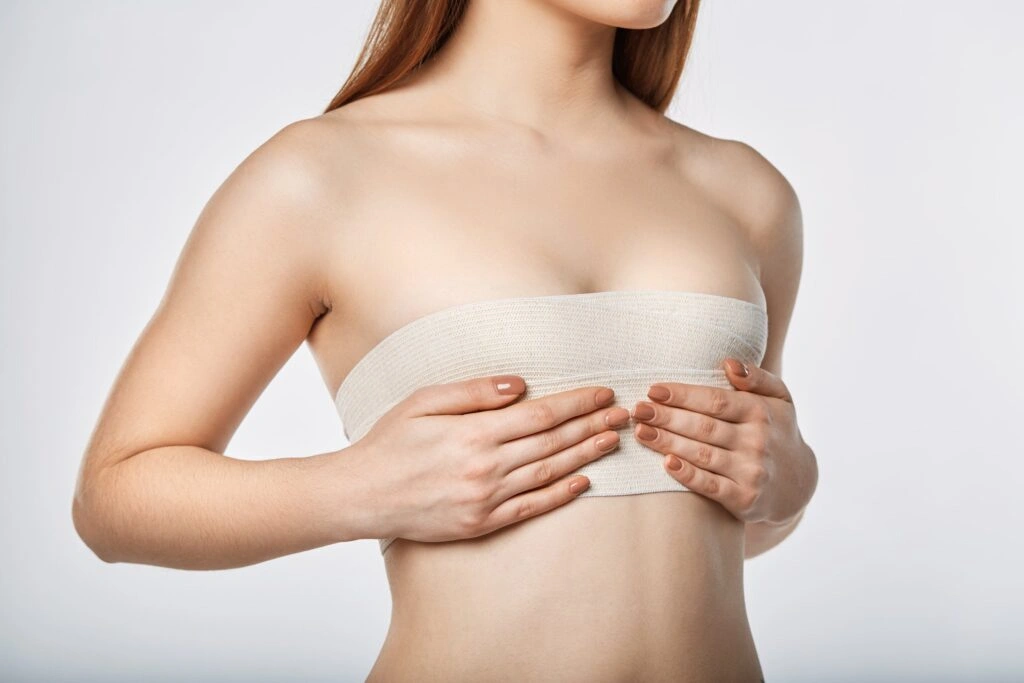
Recovery is generally straightforward. Drains are not always required, and absorbable stitches are used beneath protective dressings. A supportive post-operative bra is provided to enhance comfort and support healing.
Most patients are able to return home the same day or after an overnight stay. Swelling improves gradually over several weeks, with the majority of healing occurring within the first three months.
If radiotherapy is required, it is carefully coordinated with the oncology team to ensure optimal outcomes.
Scars and Long-Term Results
Scars are typically placed along the natural contours of the breast and chest wall and are designed to be as discreet as possible. Over time, they soften and fade, usually maturing over 12 to 18 months.
Once healing is complete, Ms Varghese provides personalised advice on scar care, including massage techniques, silicone therapy, and laser treatments where appropriate. The goal is always to achieve a natural, balanced result that is durable over time.
Chest Wall Perforator Flaps: Overview
Chest wall perforator flap reconstruction is performed under general anaesthetic and typically takes between two and three hours. Most patients stay in hospital for a day or overnight. Return to normal daily activities usually occurs within a few weeks, with full recovery over four to six weeks
Chest Wall Perforator Flaps - At a Glance

Anaesthetic
General Anaesthetic

Hospital Stay
Day case or 1 night
Drains
Not routinely required
Operating Time
Approximately 2–3 hours

Time off work
1–2 weeks (depending on occupation)

Exercise
Gentle activity from 2 weeks

Bra support
Supportive bra for 4–6 weeks

Sutures
Dissolvable – no removal required
Follow-up
1, 2, 4, 6 weeks and 3 months

Driving
Usually after 2 weeks as at this point you may not need any more dressings
About Ms Jajini Varghese MPhil PhD FRCS(Plast)
Ms Jajini Varghese is a dual-qualified consultant breast and plastic surgeon with extensive experience in oncoplastic breast surgery, breast-conserving surgery, and breast reconstruction. She practises in London within specialist breast cancer services and works as part of a multidisciplinary team to deliver safe, evidence-based, and highly personalised care.
Her dual training allows her to combine cancer surgery with reconstructive techniques, helping women achieve excellent cancer outcomes while preserving breast shape and confidence. Read patient reviews here


Advanced Oncoplastic Reconstruction
Ms Varghese combines breast and plastic surgical expertise to offer sophisticated techniques such as chest wall perforator flaps. These approaches allow cancer removal and immediate reconstruction using the patient’s own tissue, preserving both function and form.

Personalised, Supportive Care
Every treatment plan is carefully tailored. Ms Varghese takes time to understand each patient’s priorities, explaining options clearly and supporting decision-making in a calm, considered way.

Ongoing Aftercare and Reassurance
Care continues beyond surgery, with close follow-up and guidance on recovery, scar management, and any additional treatments. Patients are supported throughout their journey, with continuity and reassurance at every stage.